
The competition and inspiration for The Fortress
Hello, hello! André here once again. Last week I talked about how The Fortress first appeared as an idea. This week, since we're expected to define the domain of the game and the expected player base, I'll talk about some games with similar mechanics to ours. By studying our "competition" and inspirations, we should be able to identify what works for those games, as well as things we should avoid.
Social Simulation
One of the elements that we will focus on the most is the relationship between the main character and 42. Social simulation in games isn't anything new, especially with dating simulators recently starting to break away from their niche. However, games that focus on social situations tend to deal exclusively with that same subject, with additional gameplay elements usually being relegated to small-scale minigames.
One game series that successfully implemented social simulation within its core RPG mechanics was the Persona series. The games in this series, particularly after the launch of Persona 3 in 2006, are the perfect example of games that are better than the sum of their parts. By means of their "Social Link" system, gamers are encouraged to strengthen their bonds with other characters, as a means to perform better in traditional turn-based battles. Having stronger connections to people will allow players to raise stronger "Personas", a physical manifestation of the character's psyche related to the relationship with individual characters. In short, the more social you are, the more ass you'll kick.
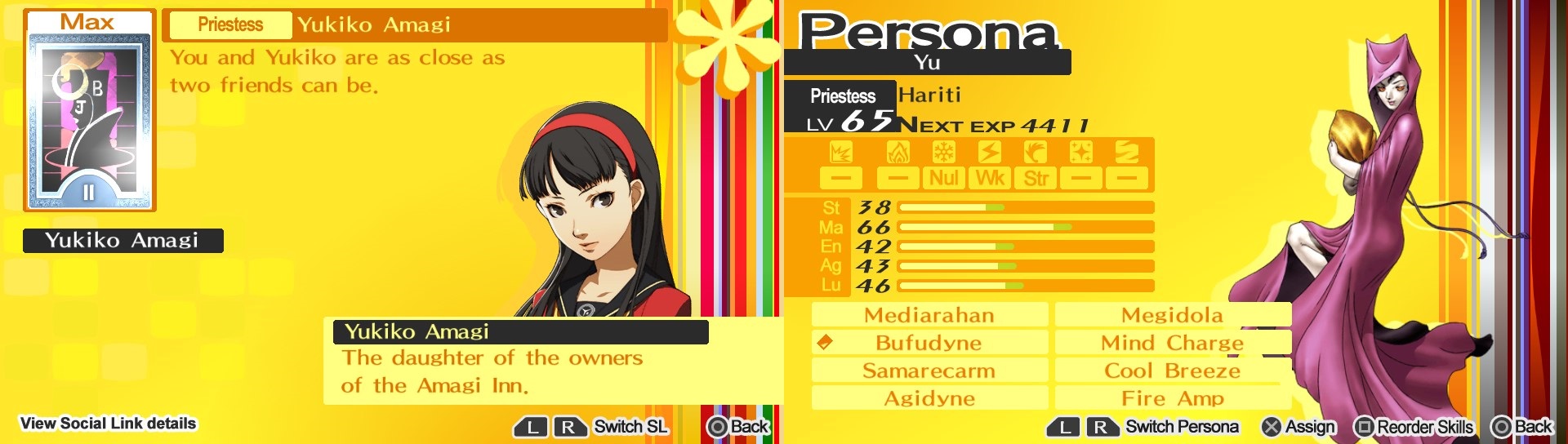
However, Persona also has some flaws that we'll need to consider. Players who love to be challenged may turn away from the Social Link system in order to keep a satisfying level of challenge, missing out on a substantial part of the game. There is no benefit to being "a dick" to other characters other than to see their reactions and alternative dialogue. Conversely, the benefits of the Social Link system may make players exploit it so much that their behavior will turn quasi-psychopathic. Players are encouraged to be a "playboy", entering as many relationships as possible, disregarding previous established relationships after the "full" bonus has been obtained, trying as hard as possible to always say what the other person wants to hear. In real-life, being a "yes-man" more often that not yields negative consequences: people will start to see you as someone with no self-respect, malleable, and, frankly, someone completely uninteresting.
So we'll need to figure out how to avoid this in The Fortress. How to make the "common sense" answer not always be the "right" answer. I think we'll have to start by giving 42 a strong personality, someone with motivations and goals of her own. As for how to handle being "a dick" to 42, we'll have to take a look at what makes sense game design-wise.
Also, one fun idea to explore after we create The Fortress is to swap the roles of the male main character and female 42. Have 42 be the man, and the main character be female. I recently played Beyond: Two Souls, and while controlling the female main character wasn't an issue for me (it was actually fun to put myself in the shoes of the opposite gender -- I sincerely spent 10 minutes deciding whether to dress sexy or classy before a date!), there were times when I was forced to make a decision that I felt I wasn't "qualified" to make. I ended the game as a loveless runaway, not because of the gender of the romantic possibilities, but because most of them were trying to appeal to my womanly desires and characteristics -- of which I, naturally, have none! So I can't help but sympathize with the many women gamers who would like to play as a character of their gender, but are more often than not forced to control a male character. Obviously, since at the moment we should be very careful with the scope of the game, this won't be something we'll consider for now. But, who knows... in the future.
Exploration
Exploration will be an important part of the game because it will trigger events that flesh out the game's characters and story, outside of mandatory events. These will also give the player bonus opportunities to work on their relationship with 42.
Exploration in The Fortress will be quite simple. There is no need for advanced systems here since a basic "face-and-press-button" system will do everything we need. The inspiration here is quite obvious, any 8-bit or 16-bit-era RPG will do.
For example, in Pokémon, players are often rewarded with items by interacting with inane parts of the environment. This gives players additional motivation to explore, rather than simply sprint to the next objective. However, it also encourages players to mindlessly press the "interact" button as they walk around, in the hopes of finding a hidden item.
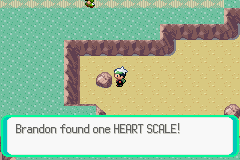
The main challenge here will be how to balance the difficulty of finding interactable elements. Naturally, we don't want to make things invisible or extremely well-hidden due to the relatively low-resolution nature of the aesthetics we have in mind, but we'll also need to have some way to reward the more prolific explorers.
Puzzles
For The Fortress, we'll need to research various types of puzzles that work within the restrictions of a 16-bit-style RPG. Most logic-based puzzles will probably be usable, but we'll need to take special care with physical-based puzzles. We'll need to make very clear what can be moved, used, picked up, and so on.
We're still researching and looking at possible inspirations for this. Right now it's looking like puzzles will be where we'll spend most of our design time on (and quite rightfully so, since a good puzzle needs some serious thinking behind it). Looking outside of video games, at real-life puzzles, might also help.
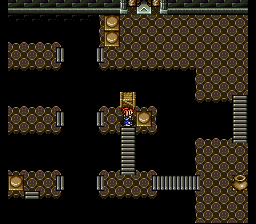
One game I did find during my investigation, though, was Lufia II. I've never played it, but Lufia II appears to be praised for its puzzles. The style of movement in this game is very similar to what we'll have in The Fortress, and from what I've seen Lufia II can get really creative with its puzzles, while still being a top-down 2D RPG. There is undoubtedly some inspiration to be obtained here.
Closing Words
We have quite a bit of work ahead of us. It's especially eye-opening to see that so much goes into making a game before even booting up the game engine for the first time. I look forward to sharing more of that as we go along. Also, I can't leave without giving a warm welcome to Andreia, the artist who joined our project this week. We can't wait to see what she brings to The Fortress!
Until next time,
André